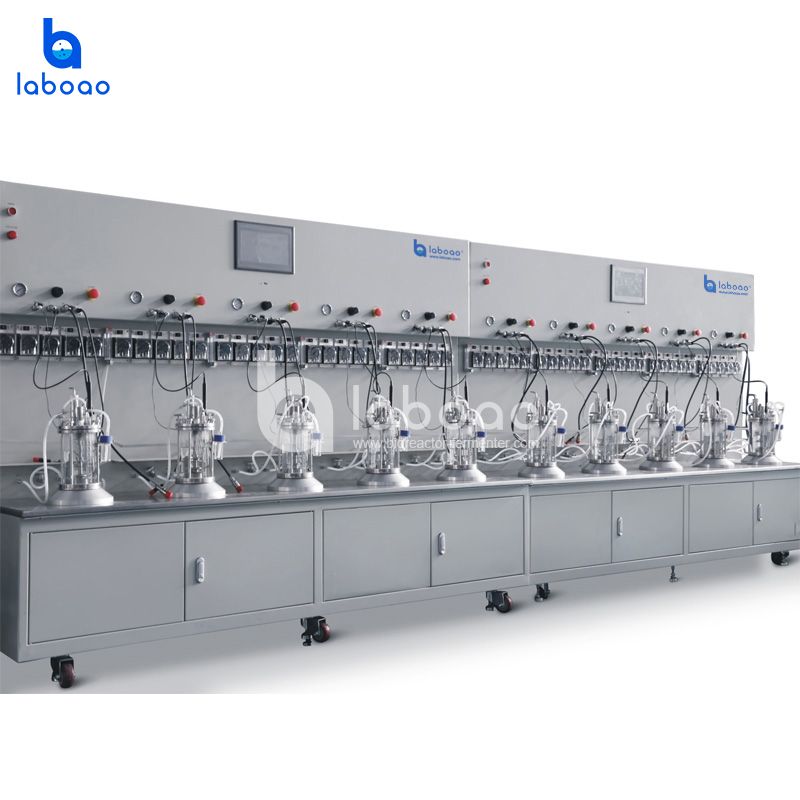
In industrial fermentation, the airtightness of the fermenter and its piping system is directly linked to the effectiveness of sterilization, the maintenance of an aseptic environment, and the stable operation of the fermentation process. Any leak—whether in the vessel itself or in the connecting pipelines—can lead to issues ranging from an inability to maintain vessel pressure and reduced oxygen transfer efficiency to severe contamination by unwanted microorganisms, which can result in the loss of an entire fermentation batch. Consequently, rigorous airtightness testing of the fermenter and its piping system is mandatory. Such testing is a critical technical aspect of fermentation operations and a foundational step in ensuring a safe and reliable process. This section outlines the methods and precautions for testing the airtightness of both stainless steel and glass fermenters.
1. Airtightness Testing of Fermenters
To ensure that no leaks have developed during the transport or installation of the equipment, a fermenter must undergo an airtightness test at its design pressure following installation.
(1) Airtightness Testing for Stainless Steel Fermenters
Close all valves connected to the vessel—including exhaust valves, sampling valves, and discharge ports—and ensure that all openings (such as ports for probes, pH and dissolved oxygen electrodes, and other connections on the vessel lid) are tightly sealed. Gradually open the air inlet valve to pressurize the vessel to its design pressure, then begin the pressure-holding period. If there is a significant leak, a noticeable drop in pressure will be observed on the pressure gauge within 30 minutes. If no significant pressure drop is detected after 30 minutes, continue the pressure-holding test for up to 3 hours; if the pressure drop does not exceed 0.01 MPa, the equipment is considered to have passed the airtightness test. For units requiring high airtightness, a 24-hour pressure-holding test is standard; the test is considered successful if the pressure drop does not exceed 10% of the initial pressure. If a pressure drop is observed during the holding period, a soap-water solution can be applied to potential leak points—such as joints or connections—to identify the source; the presence of a leak will be indicated by the formation of numerous bubbles.
Note: When conducting an airtightness test on a stainless steel fermenter, the test pressure is typically set at 1.3 times the maximum operating pressure (commonly in the range of 1.6–1.8 bar). During the test, special attention should be paid to the mechanical seal of the agitator shaft, as this is a frequent site for leaks. Furthermore, because fermentation is a dynamic process—and mechanical seals inherently have an allowable leakage rate—the airtightness of the fermenter should be evaluated comprehensively, taking into account the specific risks associated with the production process.
(2) Airtightness Testing for Glass Fermenters
To test a glass fermenter, fill it to approximately 70% of its capacity with clean water. Use hose clamps to seal the exhaust, discharge, and feed ports, then pressurize the vessel with compressed air to 0.12 MPa. The test is considered successful if the internal pressure remains stable and no air bubbles rise through the liquid.
2. Airtightness Testing for Fermenter Piping Systems
(1) Airtightness Testing for Pipelines Without Water-Inlet Connections
This category includes pipelines used for tasks such as transferring inoculum between fermenters, or adding nutrients, liquid ammonia, alkali, or anti-foaming agents. Since these lines are not connected to a water supply, they are typically tested using either an air-only method or a combined steam-followed-by-air approach. Because even a minor leak in these lines can create a risk of microbial contamination, it is critical that airtightness testing for such piping be performed in strict accordance with established requirements.
While the same testing methods used for the fermenter vessel can be applied to the piping, the presence of numerous valves can make the air-testing process inefficient, as each valve and pipe fitting may need to be inspected individually to locate a leak if the system fails to maintain pressure. Therefore, the most effective method for verifying the leak-tightness of piping is to first conduct a steam-based test on all valves and connections, followed by a pneumatic pressure-retention test.
(2) Leak-tightness testing for stainless steel piping with water inlets
During a hydrostatic test, the pressure should be increased gradually to the specified test pressure and held for 10 minutes. Subsequently, a thorough inspection of all pipe connections and valve packing areas must be performed. The hydrostatic test is considered successful if there are no leaks at any pipe connections or valve packing locations.
Strict adherence to leak-tightness testing protocols for the circulating water coils inside fermentation tanks is essential; any leakage in these coils poses a direct risk of microbial contamination.
When performing leak-tightness tests, the stainless steel fermentation tank must be pressurized to its design pressure—otherwise, minor leaks might go undetected. Mechanical seals should be inspected repeatedly, as they are common points of failure. Before steam testing, all condensate must be drained; otherwise, the steam will fail to reach the valves being tested. When touching pipes to check for leaks, withdraw your hand quickly to avoid burns and to prevent misinterpretation of the findings. During hydrostatic testing, pressure must be increased slowly and held for an adequate duration—this is especially critical for internal coils, as any leak represents an immediate risk of contamination. While these steps may seem trivial, they are vital to ensuring that the fermentation tank can truly achieve and maintain the aseptic conditions required for operation.